

Selective Focus: Chosen Family & Mutual Aid with Carolyn Olson
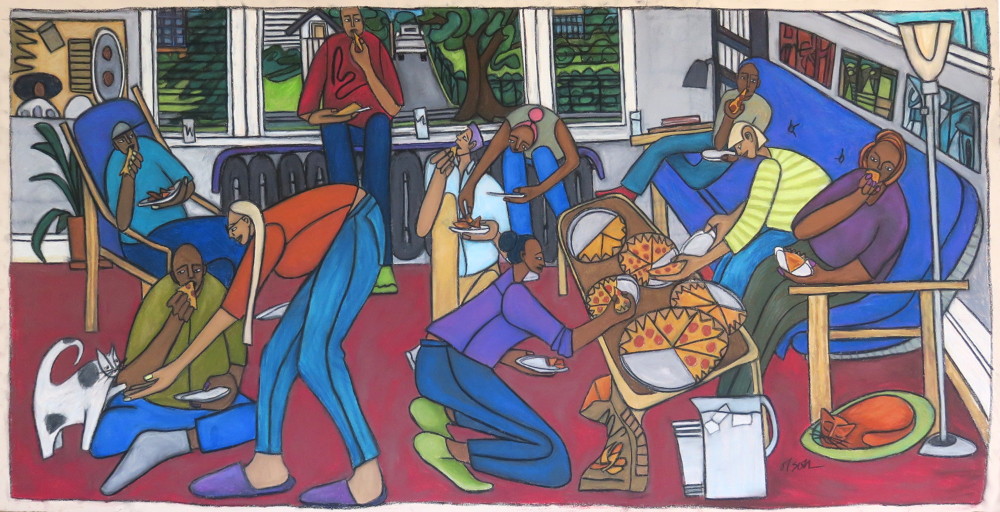
Centering on themes of mutual aid, chosen family, snapshots of the home and community spaces, Carolyn Olson works with gouache, pastel and oil to create narrative paintings. Her work has included scenes from laundromats, overnight parking areas, community gardens and food distribution locations. The subjects in her work are often presented with unrealistic body proportions to bring out different energies in the characters or accentuate the task at hand.
Olson’s work can be viewed on her website, regularly at Lizzard’s Art Gallery & Framing, or in her fully illustrated children’s picture book, Pearl’s Garden, the story of a young person wanting to grow a backyard vegetable garden. Upcoming readings of the book, published by the Minnesota Historical Society Press, are at Fitger’s Bookstore on May 16, and at the Denfeld Whole Foods Co-op on May 23. Ripple River Gallery in Aitkin hosts a solo exhibition of her collection Chosen Family and Mutual Aid series from Sept. 27 to Oct. 30.
Check out selections of Olson’s work and an interview below.
What inspired you to focus on chosen family and mutual aid within your visual art?
My family and community always inspire my work. Often the stories in my art are exactly what we were doing that week and what was happening around us. It is a way to visually talk about my life.
I’ve always drawn. As my life unfolded, with a growing family, I drew what we did together, like reading together, eating meals together, getting haircuts in the kitchen and raking leaves. Sometimes I drew what was going on around us as well like skating at the local rink, sledding down the hill in our yard, grocery shopping, etc.
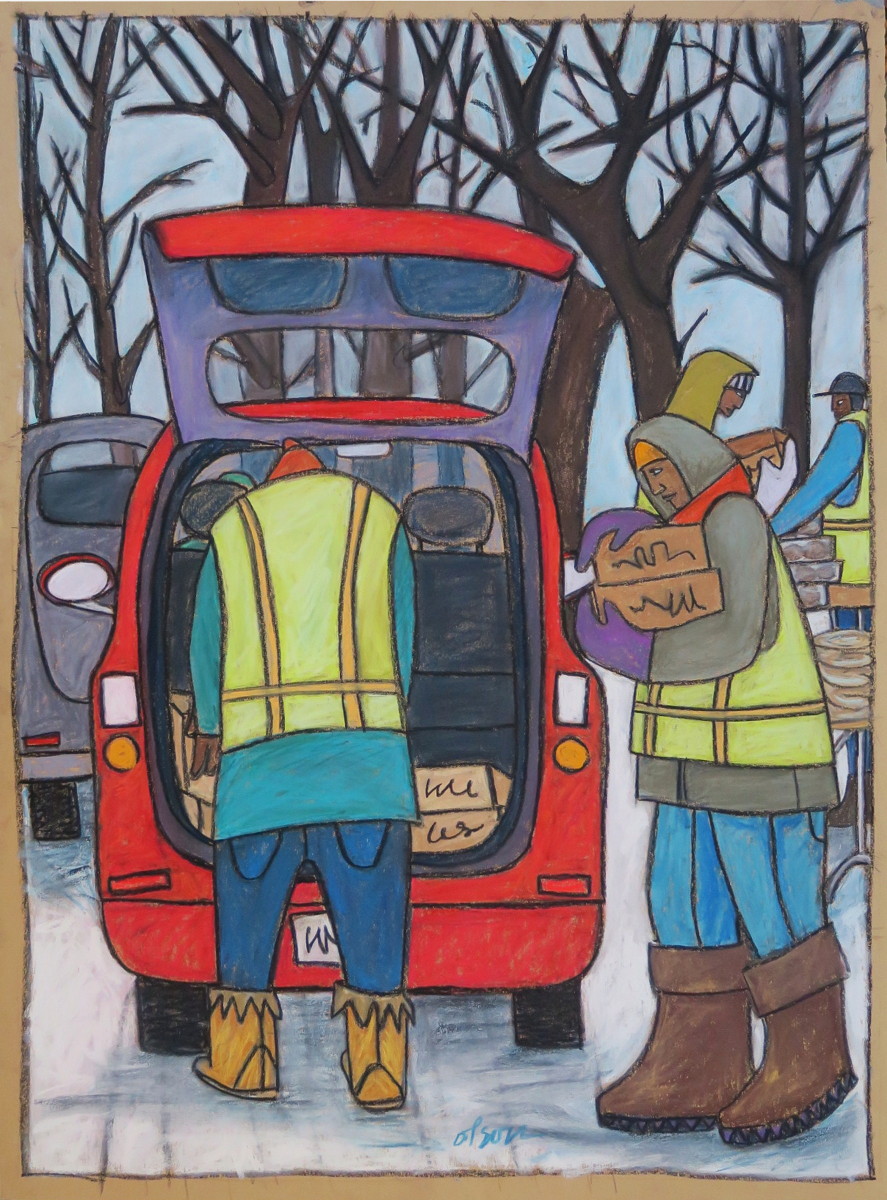
After our children grew up and left home, COVID-19 hit and our kids were (and still are) essential workers, which inspired the series of pastels Essential Worker Portraits completed in 2020-2021. And last year, in response to what our kids were living with, I completed a series of gouache paintings and prints of Workers that depicted folks who work full-time jobs, but still do not make a living wage. This work was directly responding to what our kids and their friends were dealing with as essential workers.
I thought we had a chance during COVID to make systemic changes for the better. Wages could be living wages, health care could be universal health care, housing could be affordable. But that is still a dream.
So here we are. We saw the current administration’s destructive plans coming a while ago and I began planning and sketching for the Chosen Family and Mutual Aid pastels. It’s important to remind ourselves that we aren’t alone, and mutual aid is a way for folks to build community. Chosen families are also a part of how our communities exist and thrive. We all have something we can do to keep each other strong.
Were there any additional unexpected themes that appeared in your work when focusing on chosen family and mutual aid?
I wouldn’t necessarily say unexpected, but maybe less well known. Both chosen family and mutual aid have been around forever. Folks of color have always depended on mutual aid. Their chosen families are kept close for a reason. The leaders of our country have never looked out to support black folks or Native Americans — instead they have chosen to exploit and control.
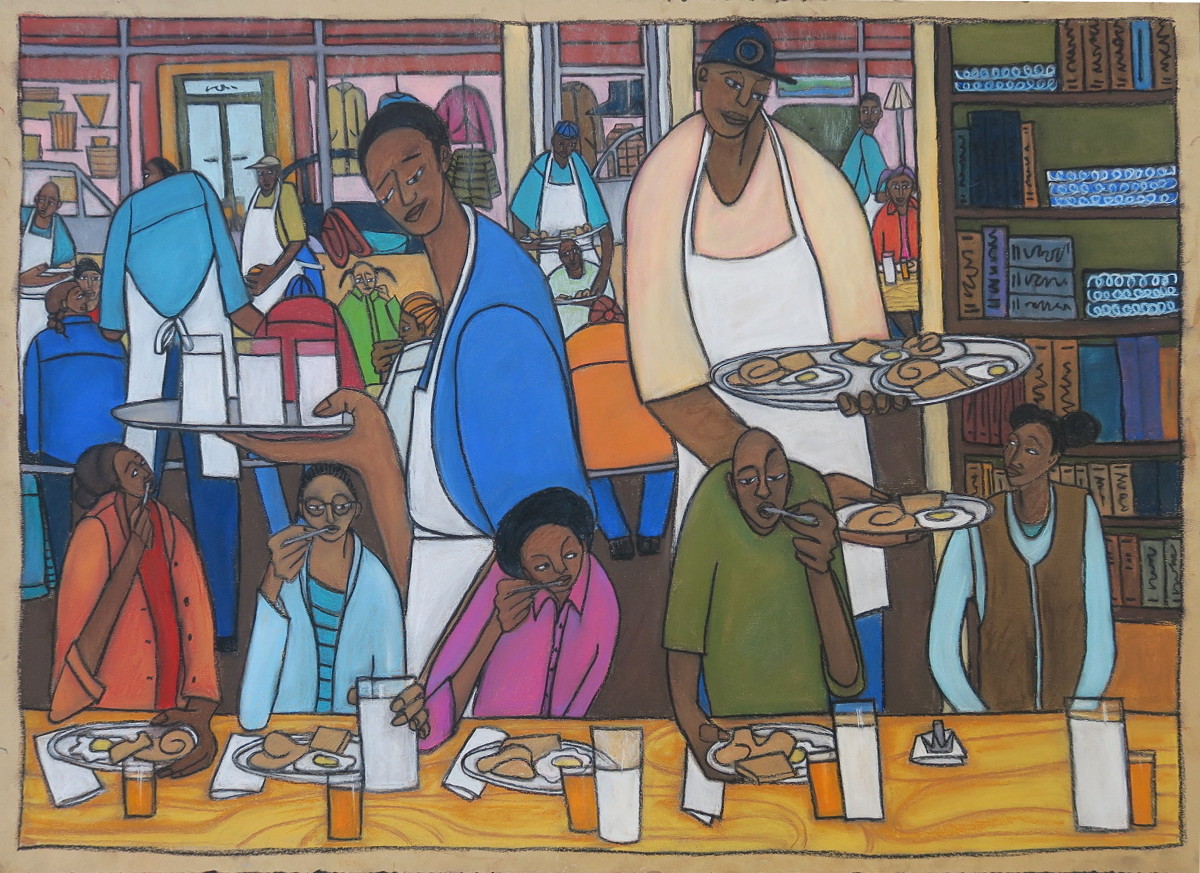
The Queer community, in particular, has embraced historical models such as the Black Panther’s breakfast and tutoring programs from the 1960s in Oakland and the Shanti Project from the 1980s in San Francisco, and built their own chosen families and mutual aid to provide for each other. GoFundMe and other online fundraisers are perhaps our modern mutual aid version of rent parties from previous generations.
Can you talk about the medium that you work with to create these images? What do you like about working with that particular medium? Is there anything else you’d like to share about your artistic style?
Traditionally, I think of myself as a painter. I’ve drawn with pastel and conte’ crayons and always loved the beautiful gestural lines the medium allows. When COVID was here, I really needed to tell these stories. Anxiety concerning my family was driving a lot of the imagery in my work. Painting for me is a much slower process, so I focused on pastels. In all I made over 100 essential-worker portrait pastels, each drawing depicting an essential worker.
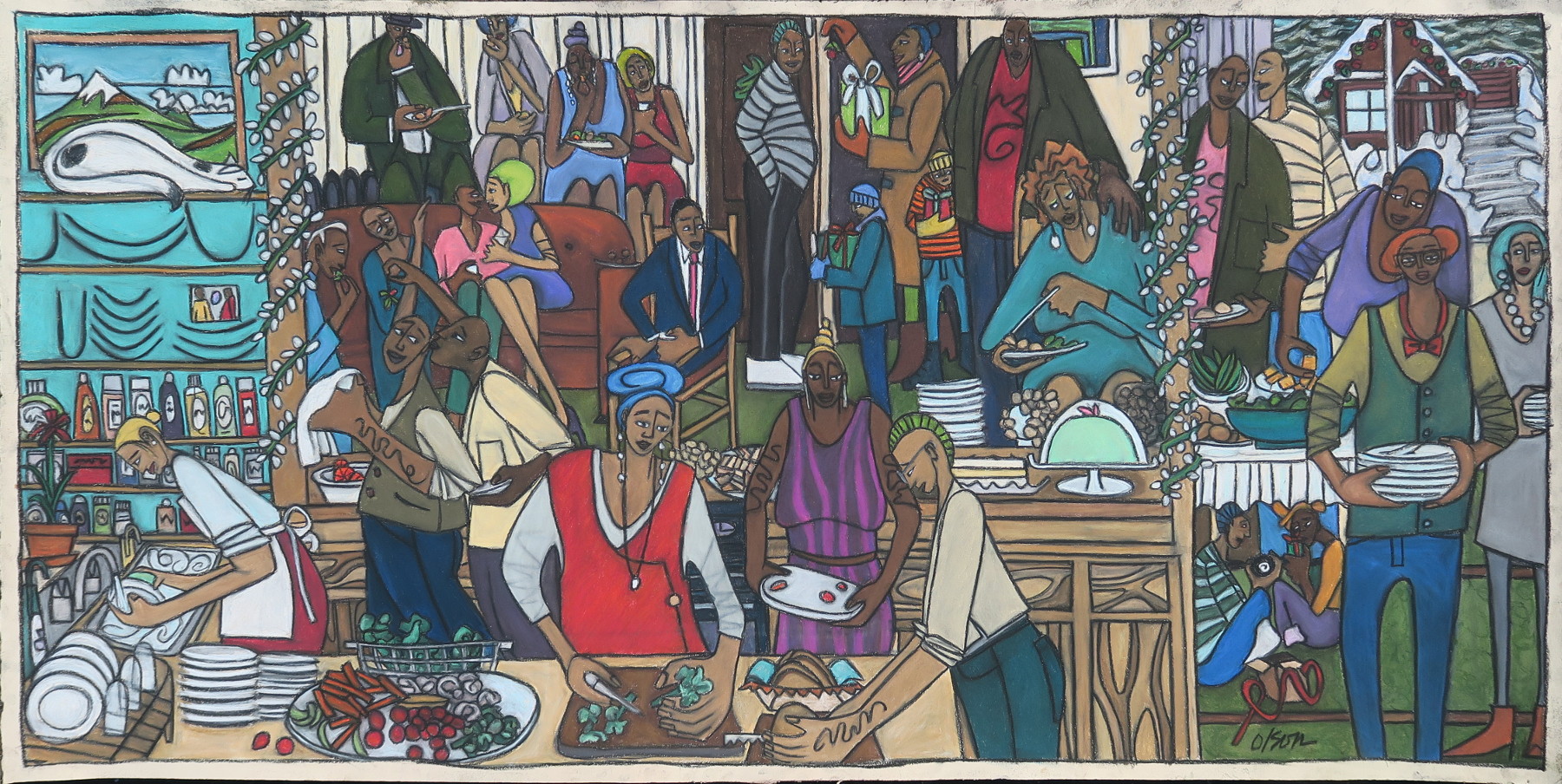
Again, with the timeliness of Chosen Family and Mutual Aid I felt an urgency to create these images to tell the story. I start by drawing the initial compositions with pencil and continue with layers of pastel. Each drawing has at least three layers of pastel. Typically, I blend the pastels like I would paint, but with my fingers, working directly with my hands blending and working the pastels to achieve the intended color, building more texture into the drawings, so that it isn’t just flat color. I hope to expand on this in the future.
The black line is the last thing I draw. The gestural expressive line that can be created in pastel is unique and I “feel” the image coming alive by my hand.
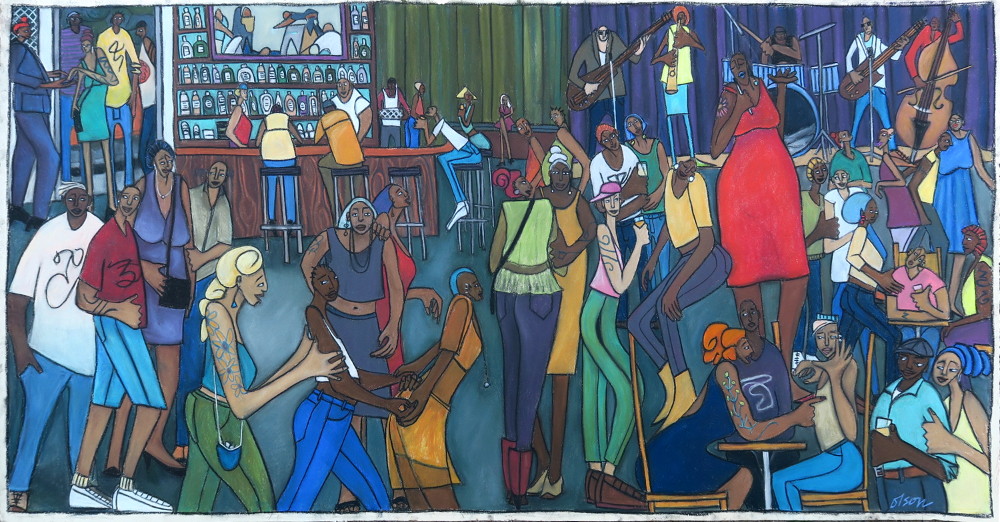
What are some of the programs and community resources represented in your artwork?
Second Harvest Northland Food Bank works compassionately to end hunger by ensuring dignified and equitable access to food for our neighbors facing hunger. Volunteers are always needed to package and distribute food. Donations, especially cash, are always appreciated.
Stepping on Up is a community-wide plan to end unsheltered homelessness in Duluth by providing services and housing with a goal of long-term stability. Volunteers are needed in a variety of services, including Safe Bay and Laundry Love.
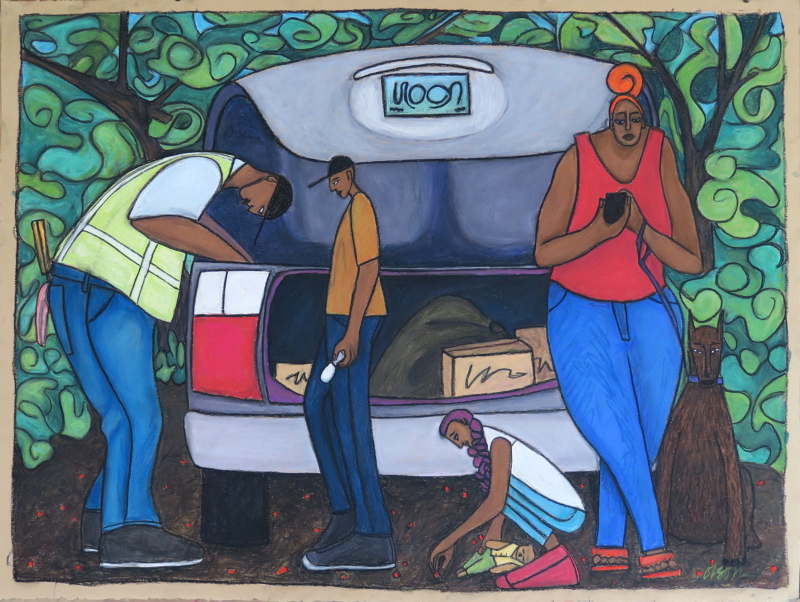
Safe Bay is a program that offers secure overnight parking for people who are living in their vehicles. It is open nightly from May 1 through Oct. 31. Volunteer hosts are needed in the evenings and mornings to welcome guests and ensure the space is safe and all guests are welcomed with dignity.
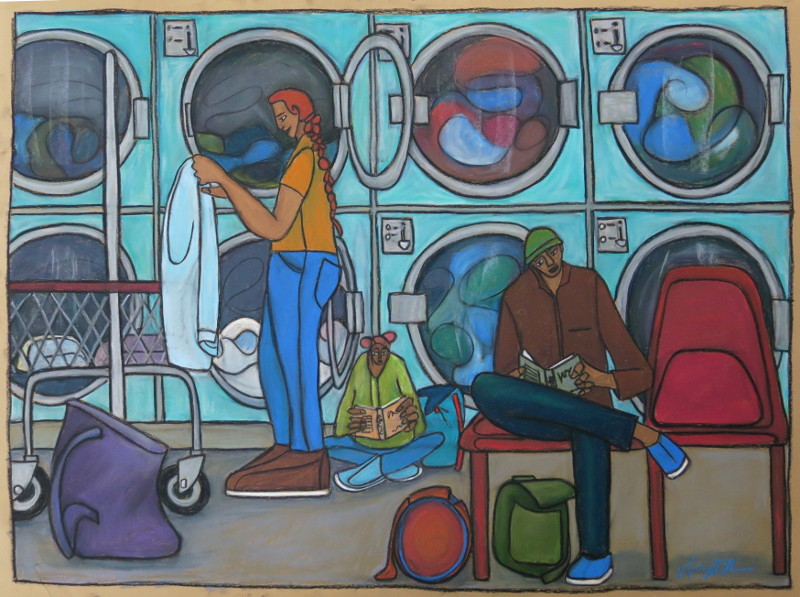
Laundry Love is a no-cost laundry service open every Tuesday at the Spirit Valley
Laundromat (232 N. Central Ave. in West Duluth) starting at 9 a.m. Laundry Love is staffed and funded entirely by community volunteers.
WE Health Clinic provides, advances and advocates for evidence-based reproductive and sexual health care for all. They are the only abortion provider in northern Minnesota, northern Wisconsin and the Upper Peninsula of Michigan.
The Warming Center is a safe nighttime space for people who are experiencing homelessness or stranded during Duluth’s cold winter months.
Additional local mutual aid resources include:
Twin Ports DSA Tail Light Repair
Twin Ports Trans & Queer Community Care
Domiano Center
Chum
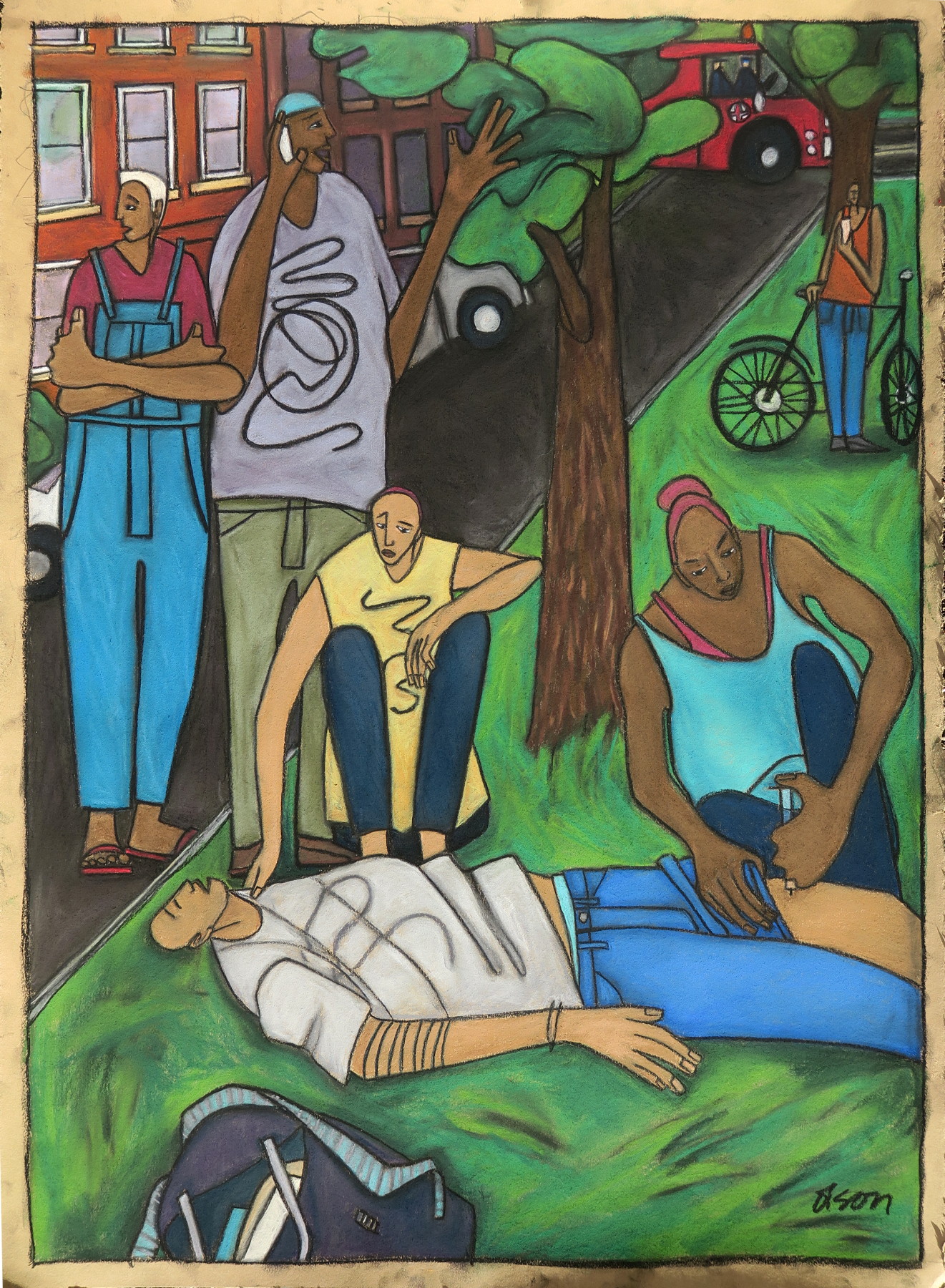
Harm Reduction Sisters
Bike Cave
National programs or efforts featured in paintings include the Black Panther’s Breakfast Program, Shanti Project, Bail Bond Mutual Aid, Mending Bloc and unions.
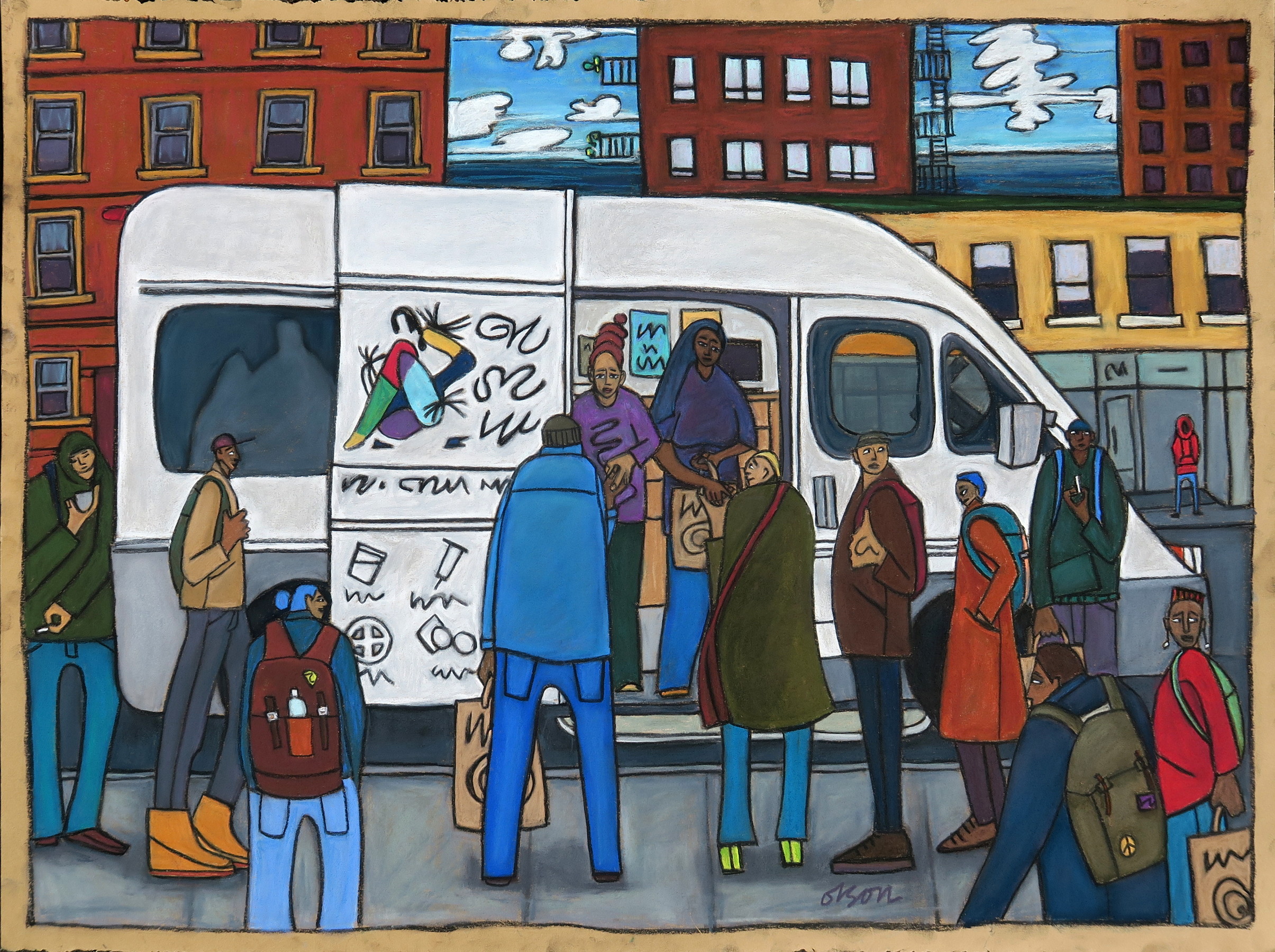
When putting together a new pastel, what is part of your process for selecting what type of public services or chosen family moments to capture? What causes you to pick a particular moment or scene?
Things that affect my family and community are the focus of my compositions … I draw and paint what is important to me. Building interesting compositions is always a challenge, so I’m sketching and working out images all the time. I will also continue to add to the Mutual Aid and Chosen Family series, but wanted to get this current body of work out now, when we need it most.
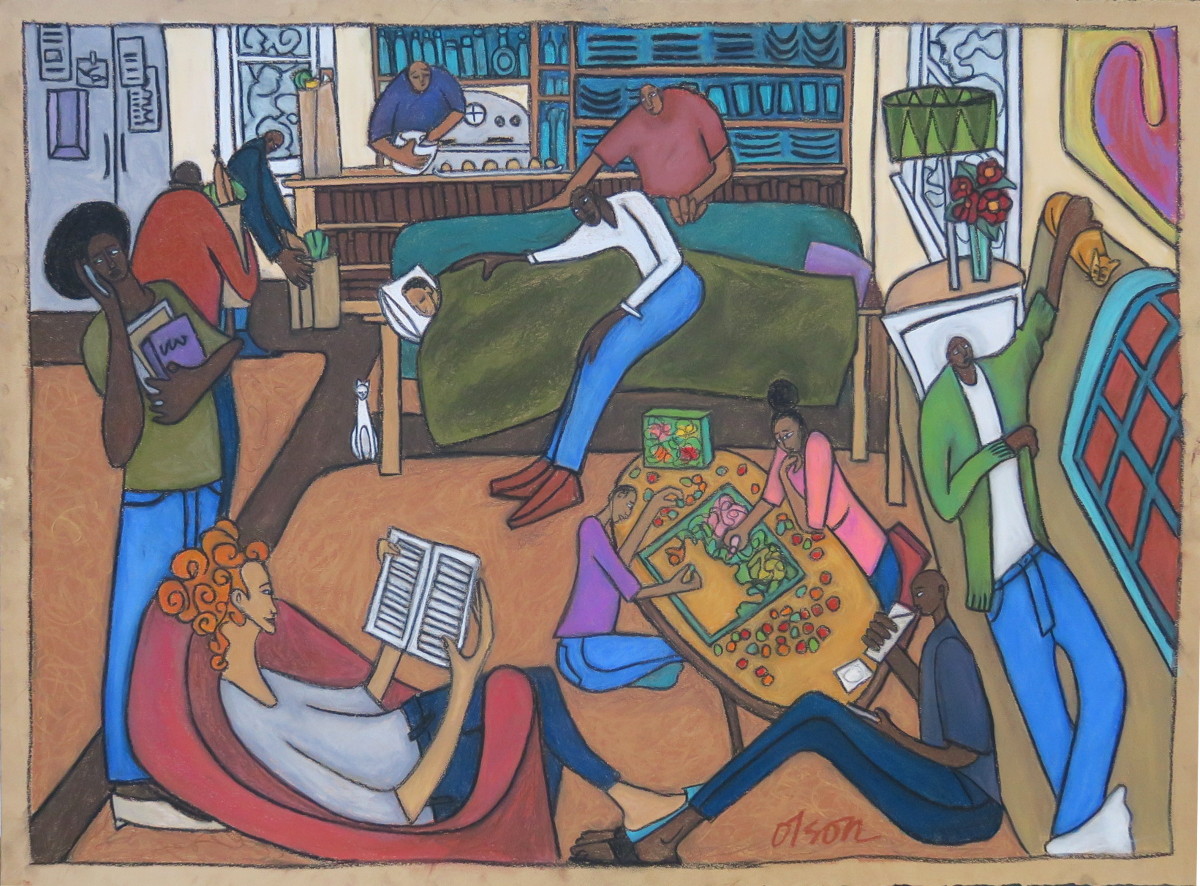
What other type of community resources or third spaces do you think would be great to have in our community that you don’t see currently?
We always need more venues for artists to show work and perform art and music. Most artists are working hard in their studios (and their other jobs) and can’t run the venues, too. Investors, patrons and benefactors are needed to sponsor venues and opportunities and to buy art.
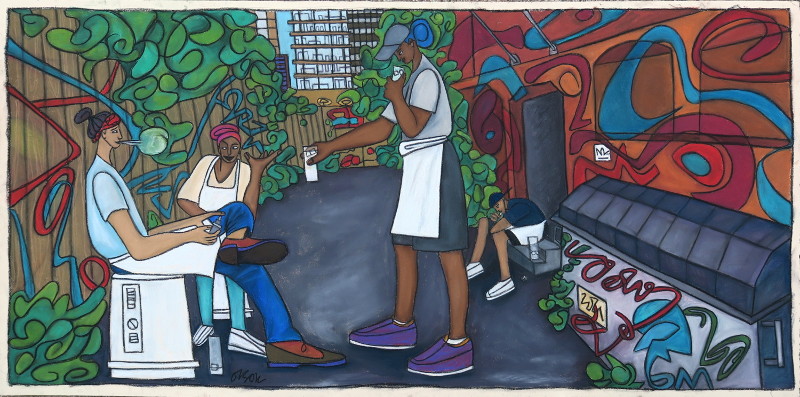
What are you hoping people take away from viewing your collection?
I hope folks are encouraged by the work to get out and do what they can for family and community. Folks can call any of the the groups shown and offer volunteer services that suit them — delivering food (Chum, Second Harvest), mending clothes (Damiano Center), fixing taillights (Democratic Socialist Party), repackaging food to be given out (Second Harvest), preparing yourself by carrying Narcan and knowing how to use it to save a life (Harm Reduction Sisters), fixing bicycles (Bike Cave and Loaves & Fishes), Laundry Love (Joel at Loaves & Fishes). Look around and see what your community needs.
To view more of Olson’s art, visit her website at carolynolson.net.