

Duluth Deep Dive #8: The Duluth Herald, Sept. 7, 1925

A classified ad from the Duluth Herald on Sept. 7, 1925. It’s not clear if anyone took up the offer on the grocery store.
Perfect Duluth Day often features individual stories from historical newspapers. This Duluth Deep Dive looks at the whole paper, adding context where necessary to the notable stories from a single edition of the Duluth Herald published one hundred years ago today, including a massive Klan rally in southern Minnesota, arrests by the Duluth Purity Squad, and highlights from the film, sports and classifieds listings.
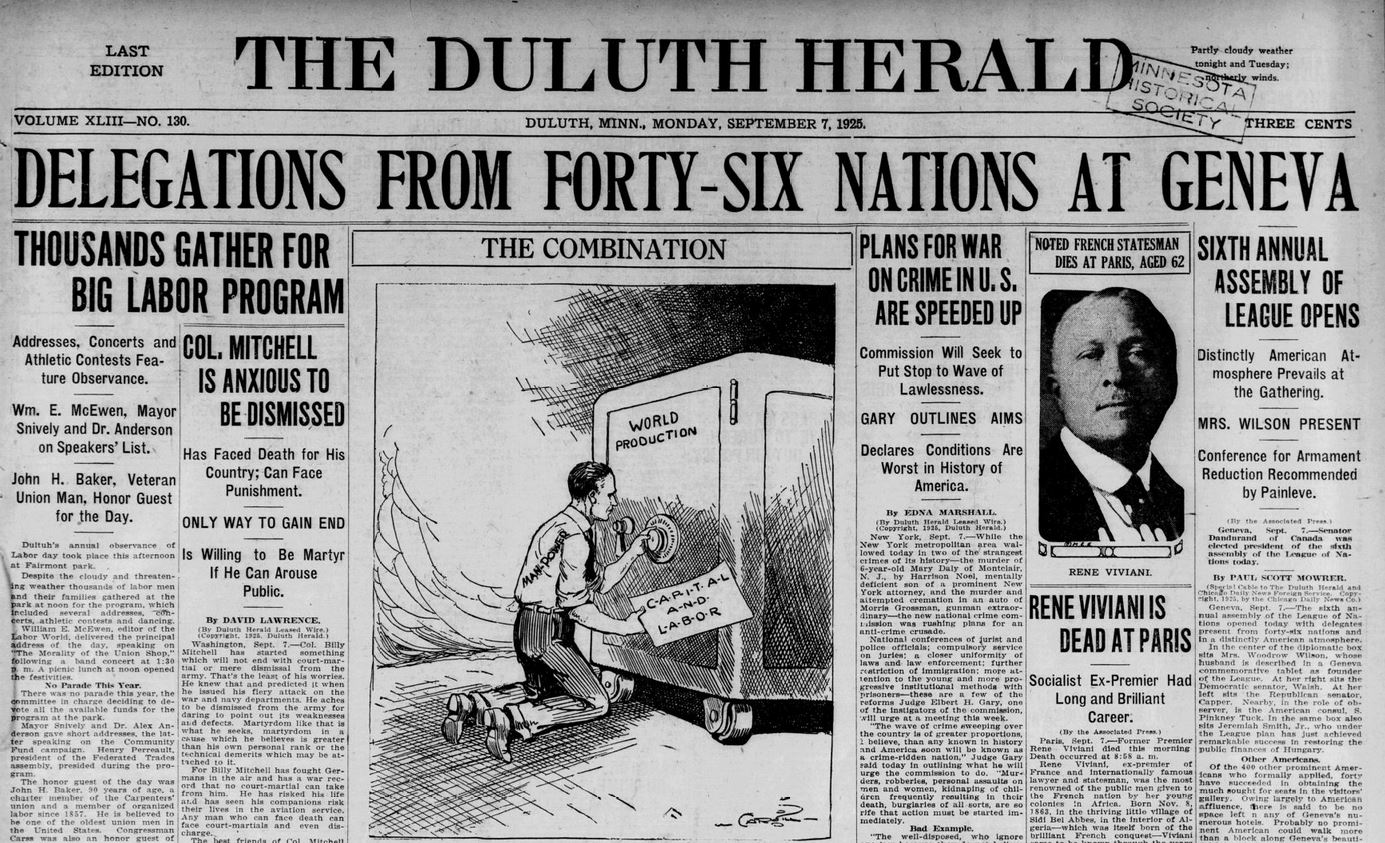
Front page of the Duluth Herald, Sept. 7, 1925.
National
The top headline one hundred years ago was the opening of the sixth annual assembly of the League of Nations in Geneva, Switzerland, a gathering that had a “distinctively American atmosphere.” The Herald noted that “never before has American interest in the league, both official and unofficial, been so apparent.”
The front page also noted that President Calvin Coolidge would be returning to the White House after eleven weeks of rest and relaxation in Swampscott, Massachusetts. During his vacation, he slept an average of nine hours a night with naps in the afternoon and would be leaving at the weight of 161 pounds, somewhat heavier than when he was vice president.
The front page also covered remarks by Judge Elbert H. Gary, one of the founders of the new national crime commission. The article begins with his warning that “the wave of crime sweeping over this country is of greater proportions, I believe, than any known in history.” Gary expressed concern that “judges are often made up of unqualified persons … the judge has too little authority and they advocate too much liberty.” The commission already had a few solutions in mind, with Gary quoted as saying, “The crime commission will war on propagandists seeking to instill hate for public authorities in the minds of young people. This will mean entering the public schools and colleges and some churches where radicals are teachers.” Gary also had a clear idea of who was responsible for crime in the United States, noting, “There is much in favor of immigration, but much crime is committed by foreigners of vicious tendencies. There must be more selective tests for immigrants by American representatives before they are allowed to leave their own countries and again before they enter here.” He also declared, “The manufacture and sale of firearms should be prohibited except for government and official use.” He concluded with the admonition, “Parents and teachers must be taught what they implant in the minds of the young men when they cheerfully break an unpopular law. Children raised in such homes have no inherent respect for law.”
The crash of a U.S. Navy rigid airship, the USS Shenandoah, just two days earlier was leading to a discussion of the need for a separate branch of the military to manage U.S. aviation forces.
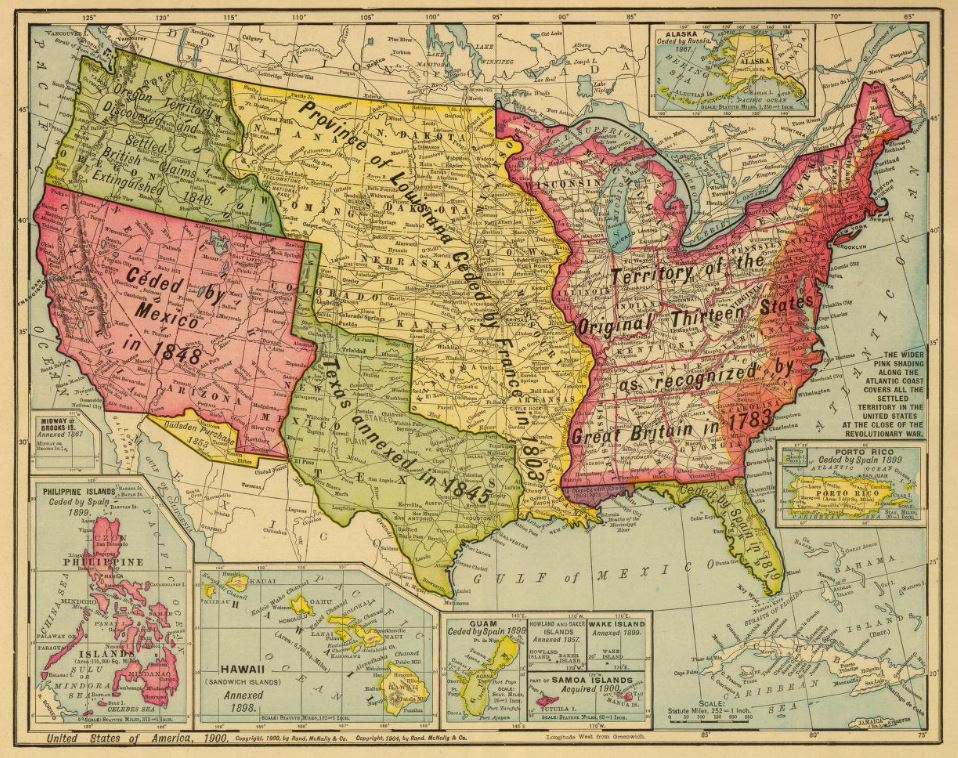
A map of the United States from 1900, showing the Philippines in the lower left corner as a U.S. territory.
Page five of the Duluth Herald contained a longer story about the U.S. occupation of the Philippines based on an interview with Major General Leonard Wood, governor general of the Philippines. He argued that the United States should remain in the Philippines indefinitely. He believed that the United States must advance the cause of civilization in the Pacific “and civilization to us means Christian civilization … paganism and non-Christianity can be broken down only by the impact of spiritual and cultural influences and these will be projected from the base of a highly developed Christian Philippines.” He noted that the United States needed to stay in the Philippines until the citizens themselves could “support a stable structure of government, of social relations and of industrial and commercial prosperity.” He held the belief that “Filipinos, despite their human charm and their many encouraging moral and mental endowments, are generally unoriginal, non-initiatory, non-constructive and dilettante. They are too childlike, too feeble, for the heavy burdens of statehood.” The United States claimed the Philippines as a territory from 1898 to 1946. In his book How to Hide an Empire, Daniel Immerwahr discusses at length what the United States did while there.
Page five also included a discussion of an agreement with France over debts from the war. Some found the terms given to France to be too favorable. The article notes that while the United States is not part of the European political system “it has a common interest with all other powers in international harmony.” It also notes that the commission looking into the deal has “very limited powers,” as “any settlement agreed upon which releases any part of the debt or the interest must go to Congress for approval.”
State
The state press association agreed that Minnesota is “too beautiful and significant a name” to be written as “Minn” and it will no longer be abbreviated in the newspapers across the state.
On the bottom of the front page, the Duluth Herald noted that not only people from the Twin Cities but also people from “many towns and cities in this section of the state” were traveling to Owatonna, Minnesota, for the largest Ku Klux Klan rally ever seen in this part of the country. The organizer expected 25,000 Klan members to participate, with 10,000 robed members taking part in a parade through the Owatonna business district. The newspaper article concluded with a note that the celebration starts at 1:30 p.m. and includes “a number of sports contests and other events.” It contains no mention of the purpose or politics behind the organization or the event. In 2024, a librarian in Owatonna, based on a call from a patron, did start looking into the activities of the KKK in southeast Minnesota. She travels to different libraries in the state sharing her findings through a presentation she calls, “Minnesota’s Hooded History.”
Four delegates from Duluth also attended a gathering in St. Paul. Sept. 7 was the opening day of the national convention of the Improved Order of the Red Men. The brief article describes the positions of the tribal and council representatives from Duluth, giving the impression that the convention was something related to advancing indigenous rights using terminology considered acceptable at the time. This is not the case. The Order, which still exists today, restricted its membership to white men until 1974. They were, and are, a fraternal organization that uses fake indigenous tribal names and rituals in all of their activities. After the meeting in St. Paul, the four Duluth delegates planned on visiting the state fair.

Two competing options for taking the train to the Minnesota State Fair.
In Stillwater, Minnesota, three members of the club The Last Two Men met. The club was founded after the Civil War by a large group of veterans that came together for a banquet every year and agreed that when there were only two club members left, those two men would meet on the following Sept. 7 and close out the club by opening an expensive bottle of wine collectively purchased by the club and toasting to their lost brothers in arms. In 1924, the three remaining club members decided they would close out the club the next year even if all three of them were still alive, as they were all in their 80s and the challenges of traveling to the banquet every year were becoming too much. On Sept. 7, 1925, “the three aged veterans drank the rare old wine, and paid their respects to their comrades of other years.” The last surviving Civil War veteran, who was not a member of the club, died in Duluth in 1956.
Local
Quite a bit was happening around Duluth on Sept. 7, 1925. The paper noted that the tourist season had hit its peak and the number of people in Duluth for Labor Day had reached a new record. The hotels were so full that the Chamber of Commerce had helped visitors find rooms in Duluth homes. The number of tourists was largely due to the number of events going on in the Twin Ports.
A large Labor Day celebration was held in Duluth’s Fairmont Park, which included sports competitions, dancing, a talk on “The Morality of the Union Shop,” and a speech from Mayor S.F. Snively.
In Lester Park, the Tri-State Hay Fever Association held its third annual picnic and dance, with a $10 prize for the best slogan for those suffering from hay fever.
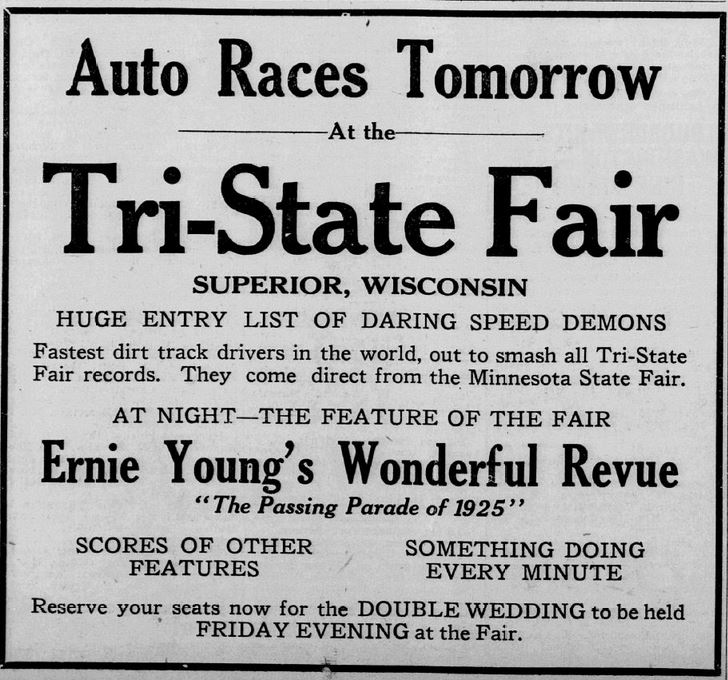
The Tri-State Fair started in Superior, with the opening dedicated to Labor Day and organized by Superior’s trade unions. The fair included automobile races, poultry and needlework displays, an “aisle of fun,” and a double wedding to represent the Twin Ports, with one couple from Superior and another from Duluth. The organizers expected 100,000 visitors across the five days of the fair.
A notice was published from Mayor Snively announcing his intention to stop the damage to trees caused by delivery horses. He declared the city was willing to arrest any driver who stopped their horse in a location that allowed the animal to eat the bark and leaves from a tree.
A section on events in the West End noted that the Trinity Lodge cribbage team would be heading to a tournament in Minneapolis.
A separate section on events in West Duluth noted that a summary of the Scandinavian Women’s Christian Temperance Union State Convention would be given in a home on 39th Avenue West and Ninth Street.
Three Saturday night arrests for unlawful possession of liquor were announced by the Duluth Purity Squad. They also made one arrest for drunk driving and another for transporting intoxicating liquor. In 1925, Prohibition was in its fifth year, ending in 1933. The Duluth Purity Squad was a unit in the Duluth Police Department responsible for enforcing local liquor laws. The first mention of the Purity Squad in the Duluth Herald is on Jan. 15, 1917, three years before Prohibition, when the squad raided a club at 913-½ W. Michigan St. (now an I-35 exit ramp) and another that was known “to be a blind for lid tilting,” or ignoring the rules on selling alcohol.
Film
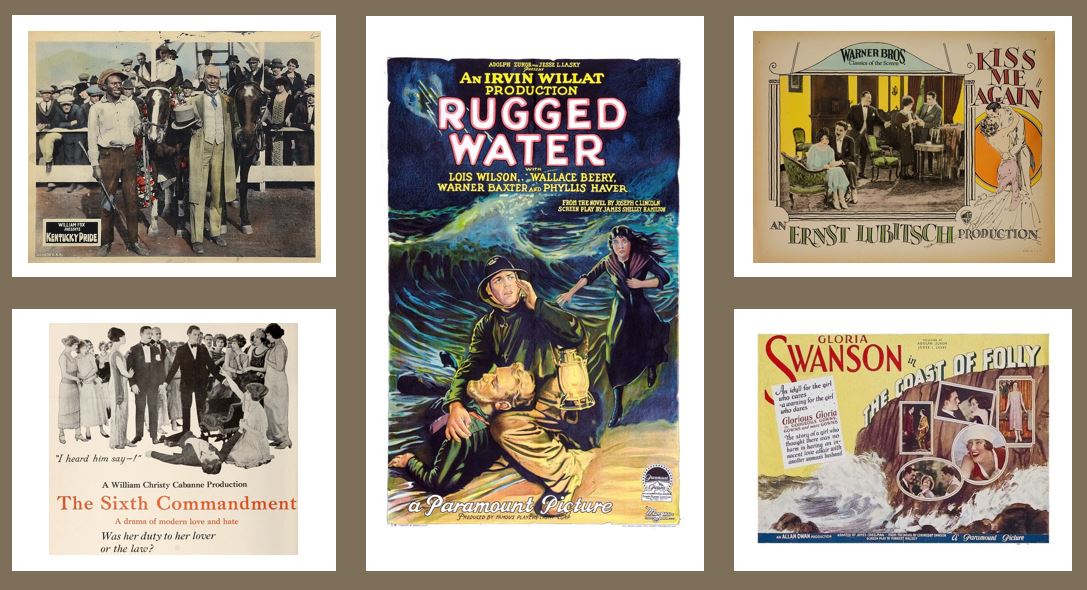
Posters of movies playing in downtown Duluth in 1925.[Source: IMDB]
There were plenty of movies to be seen downtown, including Gloria Swanson in The Cost of Folly at the Lyceum, The Sixth Commandment at the Lyric, Kiss Me Again at the Garrick, Rugged Water at the New Strand Theater, and Kentucky Pride at the Zelda. Most of the movies had something happening before the feature film to bring in audiences. The Zelda was showing the first images of the Shenandoah disaster. The Garrick had performances by Noble Sissle and Eubie Blake, the producers of 1921’s Shuffle Along, the first hit Broadway musical written by Black artists about Black life and credited with inspiring the Harlem Renaissance. The Lyric had comedienne Madge Maitland, described as “a gifted impersonator of Jewish types.”
All of the films playing downtown in 1925 have been lost, with the exception of Kentucky Pride, a film by John Ford, the director of The Searchers and The Man Who Shot Liberty Valance. You can watch Kentucky Pride in its entirety on YouTube. The Duluth Herald noted, “No matter how many race course plays you have seen, you will like this one.”
Sports
Babe Ruth was suspended and fined five thousand dollars for “misconduct off the field,” with speculation that this might mark the end of his career. He retired 10 years later at the age of 40.
Ty Cobb, former star baseball player and manager of the Detroit Tigers, announced that he would be managing the Chicago Cubs in 1926.
The Duluth M. Cook & Sons baseball team had a 4 o’clock game scheduled in Duluth Athletic Park against the Bertch Furniture Team of Minneapolis. The Duluth team had just played in Hibbing and “swept through the Mesaba Range players yesterday like the grasshoppers did through Kansas.”
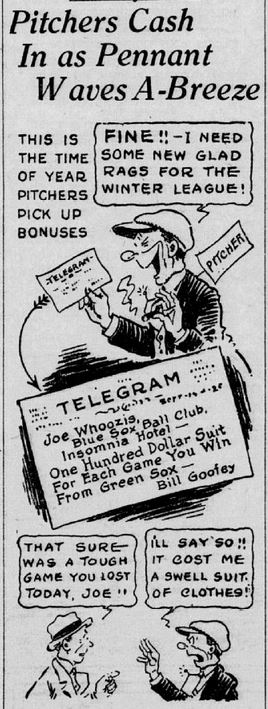
Columnist Al Demaree defended the practice of offering to buy a pitcher a new overcoat if he beat a rival team, as the promise of a new suit of clothes “can give the pitcher that extra, subconscious mental incentive to win that is sometimes the only difference between victory and defeat.”
In San Francisco, Jack Dempsey staged an exhibition match against two different boxers, each of whom hoped to last two rounds against the famous fighter. Dempsey held the world heavyweight championship title from 1919 to 1926.
Classifieds
Before Craigslist and Facebook Marketplace, the classifieds were the place not only to buy and sell personal items, but also to get out a variety of messages to the community. The image below collects some of the more interesting listings from Sept. 7, 1925.
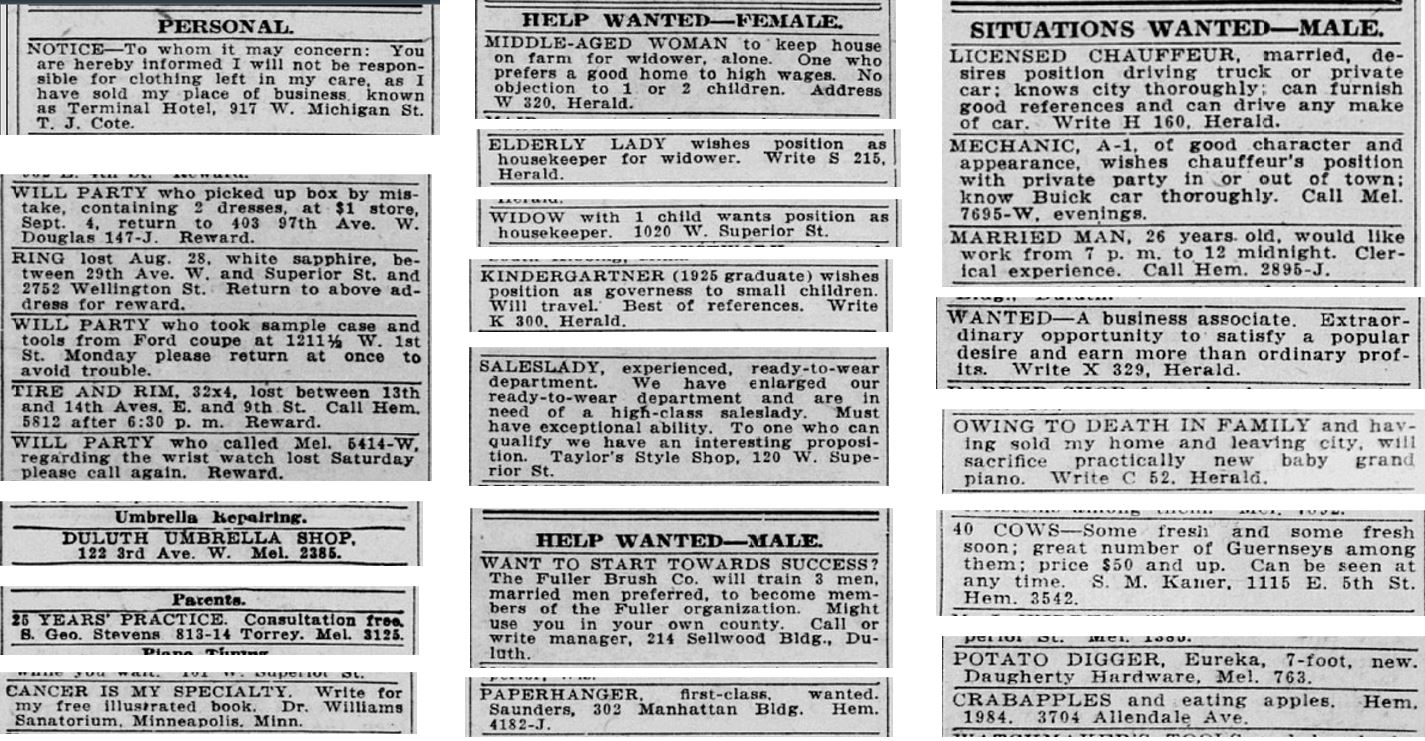
A lot has changed in the past 100 years. A lot still looks quite familiar. Perhaps someone will make the same comparison in 2125 and be just as surprised by both the progress and the parallels.
This month’s Geoguessr consists of locations mentioned in the Duluth Herald on Sept. 7, 1925. Each round lasts five minutes.
PDD Geoguessr: The Duluth Herald, Sept. 7, 1925
More information on how to play Geoguessr can be found here.